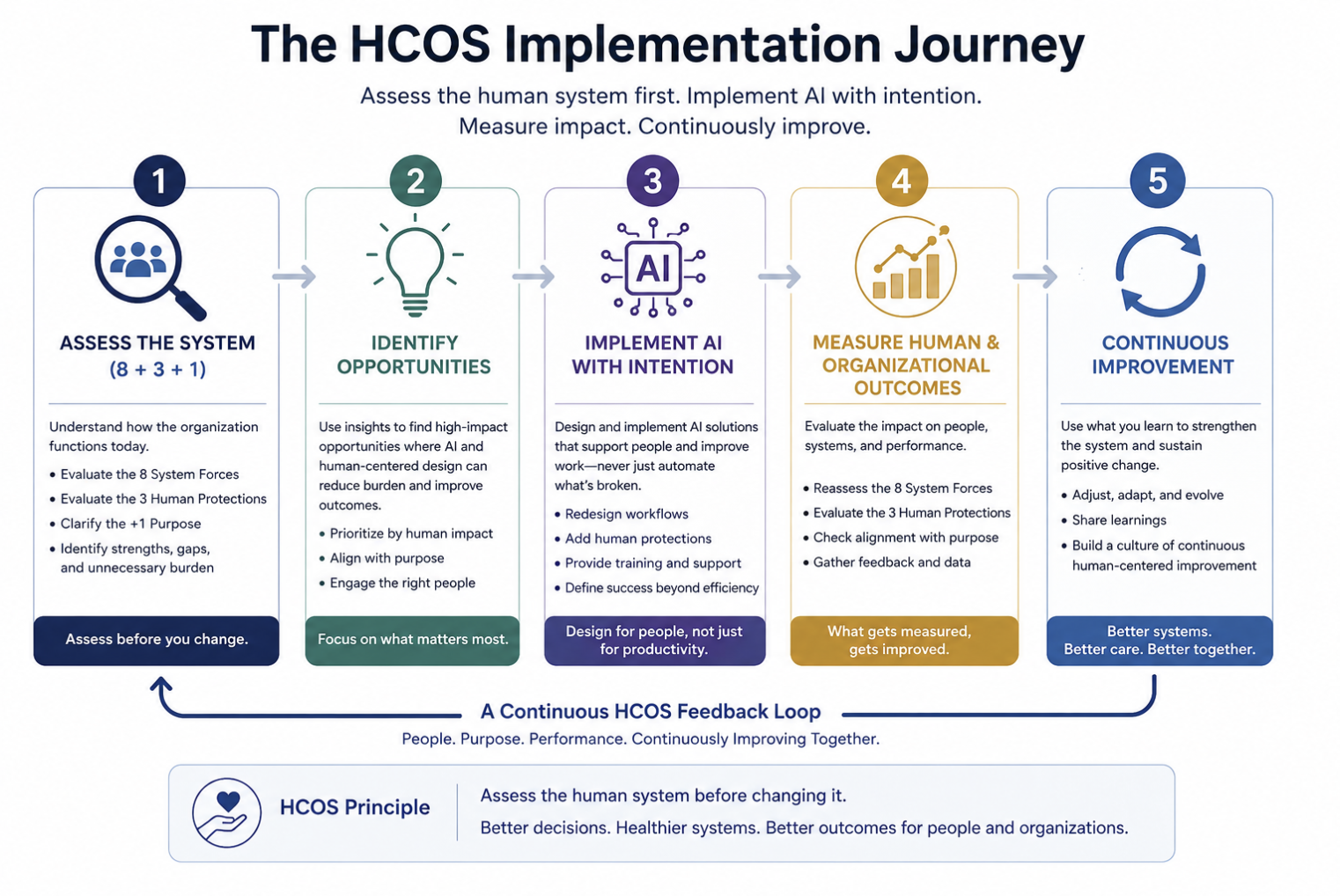
Human-Centered Operating Systems™ Framework
Designing healthier systems that help people, organizations, and technology succeed together.
Framework: Explains the core HCOS model and how thoughtful system design supports better outcomes for everyone.
What is HCOS™ Framework?
Human-Centered Operating Systems™ (HCOS) is a human-centered decision intelligence architecture that works alongside AI to help organizations understand the human consequences of decisions before they are implemented.
AI asks: What can we do?
HCOS asks: What happens next?
A Core HCOS Principle: Where does the pressure go?
HCOS helps leaders determine whether decisions reduce pressure or simply move it somewhere else.
The Outcome:
Healthier systems
Stronger teams
Greater trust
Better AI adoption
How the Framework Works?
The HCOS™ Framework is built in layers. Each layer builds upon the one before it.
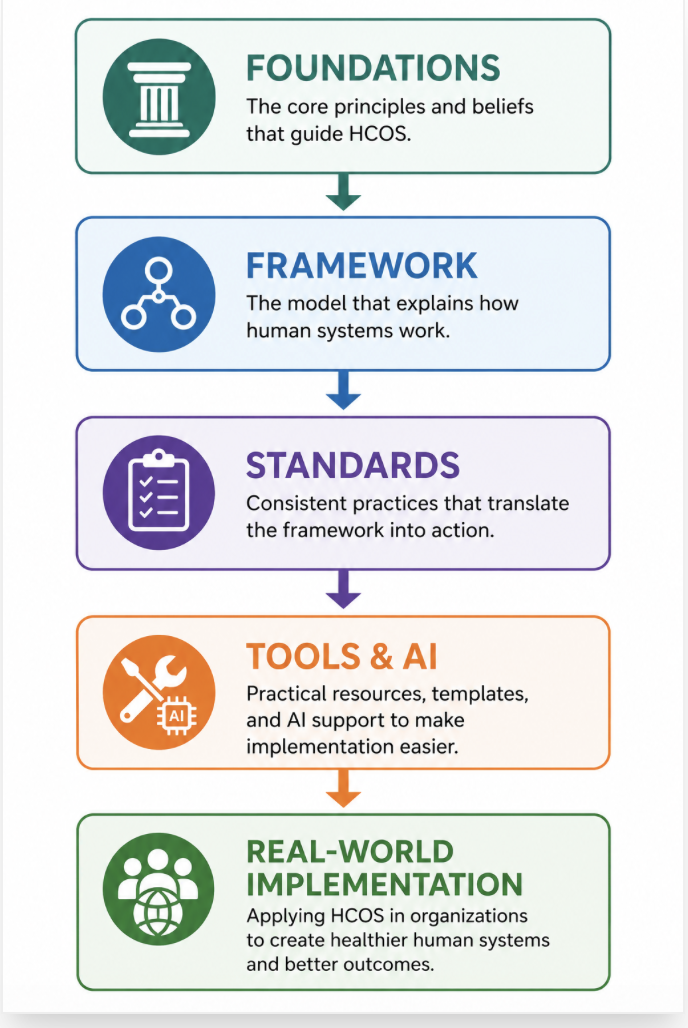
The Core HCOS™ Framework
1. Human Systems
Every organization is a system made up of people working together toward a shared purpose. People are not separate from the system they are part of it. Understanding the system is the first step toward improving it.
2. The Eight Systems Forces
Every organization experiences pressures that shape how work gets done.
HCOS™ identifies eight system forces:
Workload
Workflow
Policies
Metrics
Resources
Leadership Decisions
Daily Operations
Recovery Time
These forces influence both organizational performance and the daily experience of the people within the system.
3. The Three Human Protections
Healthy systems intentionally protect people through three guiding practices:
Wisdom
Making decisions that fit the realities of the situation rather than relying on assumptions or habit.
Compassion
Recognizing that sustainable performance depends on protecting human dignity and well-being.
Presence
Creating environments where people can communicate openly, collaborate effectively, and contribute their best thinking.
4. Love of the Work (+1)
Beyond systems and protections lies the reason many people chose their profession in the first place.
Purpose, meaning, and connection to the work sustain motivation and help organizations flourish over time.
HCOS™ recognizes that healthy systems protect not diminish that sense of purpose.
The Human Load Navigator™
Organizations create demands that people must carry.
The Human Load Navigator™ helps identify where pressure exists, who carries it, and whether that pressure supports meaningful work or creates unnecessary burden.
It encourages leaders to ask:
Where is the pressure?
Who is carrying it?
Is it necessary?
Can the system be redesigned?
Human Centered AI: Better decisions begin with understanding the system.
Before introducing AI, redesigning workflows, or implementing organizational change, leaders should first understand how the existing system functions.
HCOS™ provides a structured approach for identifying strengths, uncovering unnecessary burden, and ensuring technology supports people rather than simply accelerating existing processes.
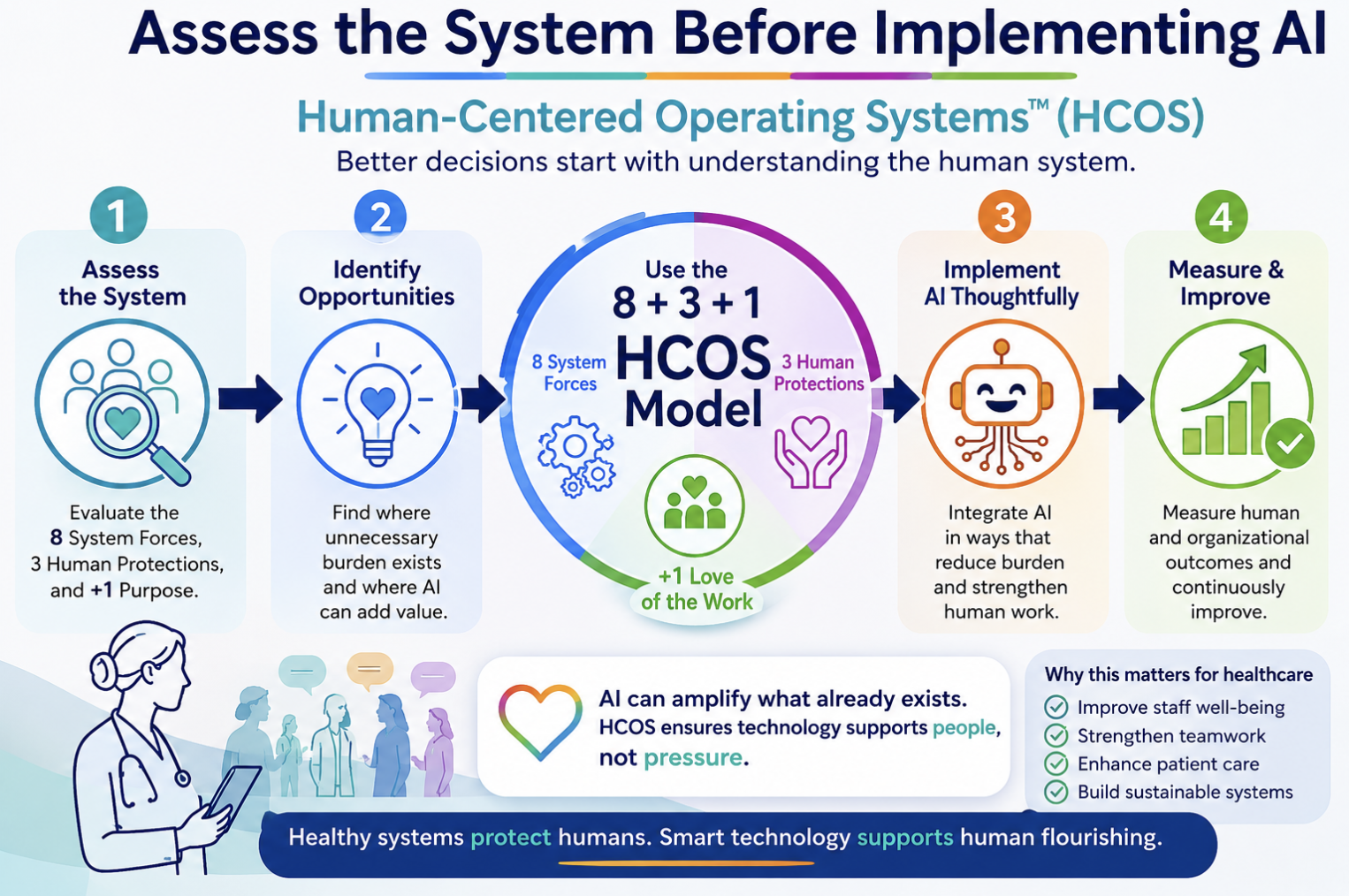
The HCOS™ Framework (8 + 3 + 1)
The 8 + 3 + 1 Human-Centered System
For a system to truly thrive, the human element must be part of its design. Too often, systems focus on processes, metrics, and efficiency while overlooking the people carrying the work. When the human experience is ignored, unnecessary suffering and chronic stress begin to appear. Sustainable systems require intentional change so the humans within them can thrive, not simply endure.
The 8 + 3 + 1 Human-Centered System Model helps identify where structural pressure and human needs must be balanced.
The 8 = What the system manages (the operational forces).
Eight system forces shape daily work:
Workload, Workflow, Policies, Metrics, Resources, Leadership Decisions, Daily Operations, and Recovery Time.The 3 = How the system makes decisions (the human protections).
To remain sustainable, systems must also protect the human core:
Wisdom, Compassion, and Presence.The +1 = Why the system exists (its purpose).
And one element sustains the work beyond structure and process:
Love of the Work.
When systems protect both structure and humanity, organizations become stronger, more resilient, and better able to deliver care.
Assess the human system before changing it. Learn from the results after implementation.