HCOS™ Foundation 4: Systems Shape Behavior Through Culture

Core Principle

Systems create culture, and culture shapes behavior. The policies organizations establish, the incentives they reward, the behaviors leaders model, the resources they provide, and the environments they create all influence how people think, communicate, collaborate, and make decisions. Culture is not simply what an organization says it values. Culture is what people consistently experience.

Foundational Truth

People are responsible for their choices. At the same time, those choices are influenced by the culture created by the system around them. Culture develops through repeated experiences. It reflects what is rewarded, what is discouraged, what is tolerated, what is ignored, and how people are treated during both success and failure.Healthy systems intentionally create cultures that encourage learning, trust, accountability, creativity, and continuous improvement.

Why This Matters

Culture influences nearly every organizational outcome. It shapes whether people:

  • Speak up when they identify a concern.

  • Report mistakes before harm occurs.

  • Ask for help.

  • Share new ideas.

  • Collaborate across teams.

  • Learn from failure.

  • Trust leadership.

  • Feel psychologically safe to contribute.

When cultures are built primarily on fear, excessive control, or constant criticism, people often become more concerned with protecting themselves than improving the organization. Communication decreases. Innovation declines. Mistakes become hidden rather than discussed. Trust erodes. Healthy cultures create conditions where people feel supported to contribute honestly while remaining accountable for their decisions.

Key Concepts

Leadership Shapes Culture

Leadership behavior becomes organizational behavior. People observe how leaders respond to disagreement, mistakes, uncertainty, and change. Those responses communicate what the organization truly values. Respect often produces respect. Trust encourages trust. Fear frequently produces fear. The behaviors leaders consistently demonstrate become the behaviors others often model.

Culture Influences Relationships

The culture established by leadership influences how coworkers treat one another. Supportive cultures encourage collaboration, curiosity, and mutual respect. Controlling cultures often encourage blame, defensiveness, competition, and unnecessary criticism. Over time, these behaviors become normalized unless the system intentionally changes. Healthy systems recognize that respectful relationships strengthen both people and organizational performance.

Learning Cultures View Mistakes Differently

Mistakes should always be addressed appropriately, particularly when safety or ethics are involved. However, healthy cultures first seek understanding before assigning solutions.

They ask:

  • What happened?

  • What contributed to the outcome?

  • What can we learn?

  • What improvements to the system could reduce the likelihood of recurrence?

Learning cultures strengthen accountability because they seek both individual responsibility and system improvement.

Creativity Requires Psychological Safety

People contribute their best ideas when they believe their voices matter. Healthy cultures encourage respectful disagreement, thoughtful questions, and constructive feedback. When people fear embarrassment, retaliation, or constant criticism, creativity declines. Psychological safety does not eliminate accountability. It creates the conditions that allow people to contribute honestly while remaining responsible for their actions.

Artificial Intelligence (AI) Reflects the Health of the System

AI does not automatically improve organizational culture. AI learns from and operates within the systems into which it is introduced. When implemented within healthy systems, AI can reduce unnecessary administrative burden, improve efficiency, and create more time for meaningful human work. When implemented within unhealthy systems, AI often accelerates existing dysfunction. Poor communication becomes faster. Poor workflows become more efficient. Unhealthy incentives become more deeply embedded. Technology amplifies the culture of the system that implements it. Healthy organizations strengthen the system before scaling it with AI.

Putting It Into Practice

Before implementing change, ask:

  • What culture is our system creating?

  • What behaviors are we rewarding?

  • What behaviors are we unintentionally discouraging?

  • Do people feel safe raising concerns?

  • Do leaders model the behaviors they expect from others?

  • Will this change strengthen trust, collaboration, and learning?

  • Will AI strengthen a healthy system or simply accelerate existing problems?

Culture is not changed through slogans. Culture changes when systems change.

Reflection Questions:

  • How would employees describe your organization's culture?

  • What behaviors are consistently rewarded?

  • What behaviors are unintentionally reinforced?

  • Do people feel psychologically safe to contribute new ideas?

  • Where do fear, blame, or unnecessary criticism appear within the system?

  • What system changes would create a healthier culture?

Looking Ahead

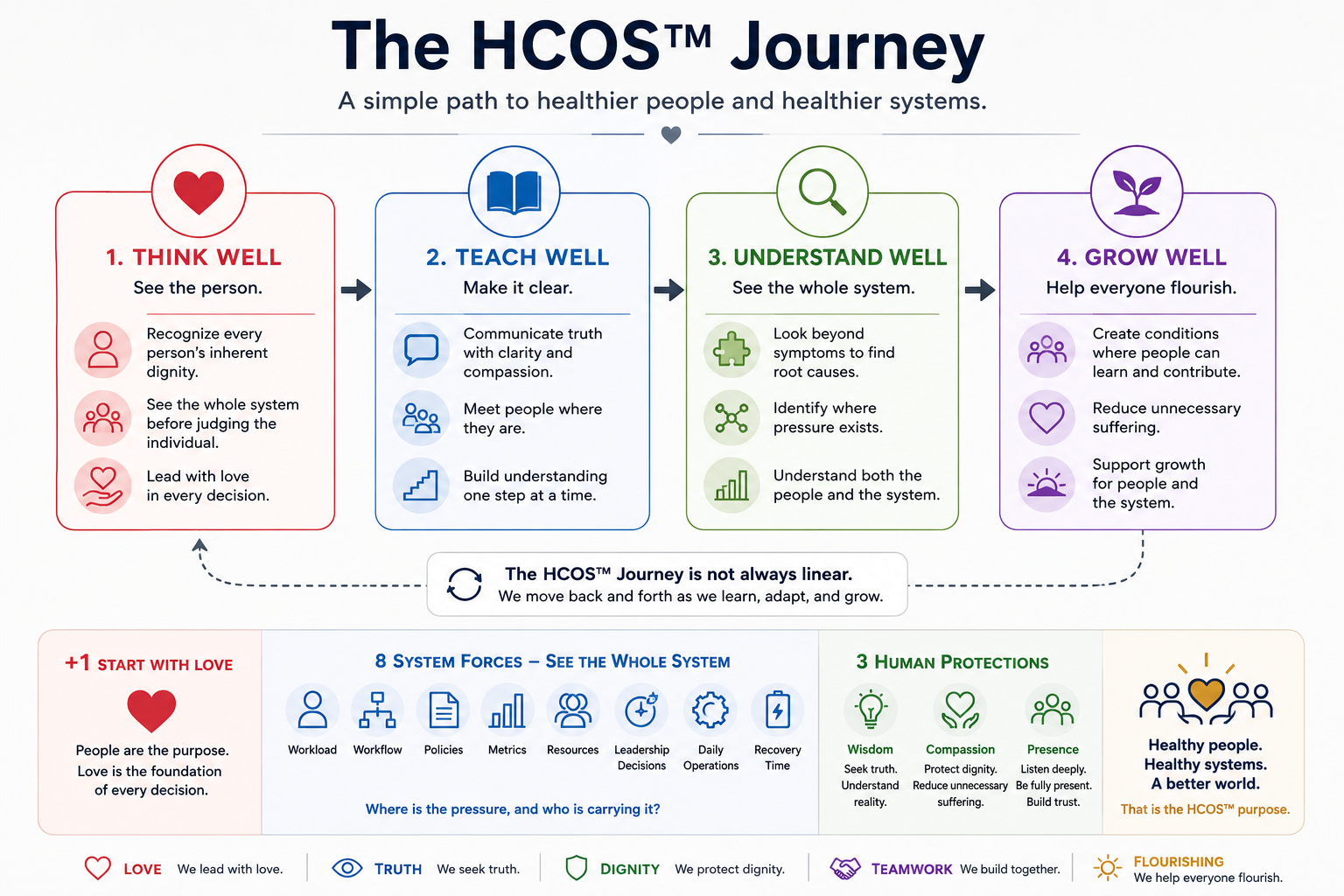
Healthy cultures create the conditions for people to flourish, but healthy cultures also require thoughtful interventions. The HCOS Guiding Principles: Wisdom, Compassion, and Presence help leaders design protections that reduce unnecessary suffering, preserve dignity, and strengthen healthy human systems.