HCOS™ Foundation 6: Human Dignity Is Inherent

Purpose

Human dignity is the foundation of every healthy relationship, organization, community, and society. HCOS begins with a simple belief: Every person possesses inherent dignity. Dignity is not earned. It is not created by success or taken away by failure. It does not depend on intelligence, productivity, education, wealth, health, age, ability, beliefs, culture, position, or achievement. Every person possesses intrinsic worth simply because they are human. When we recognize this truth, we begin designing systems that protect people instead of using them.

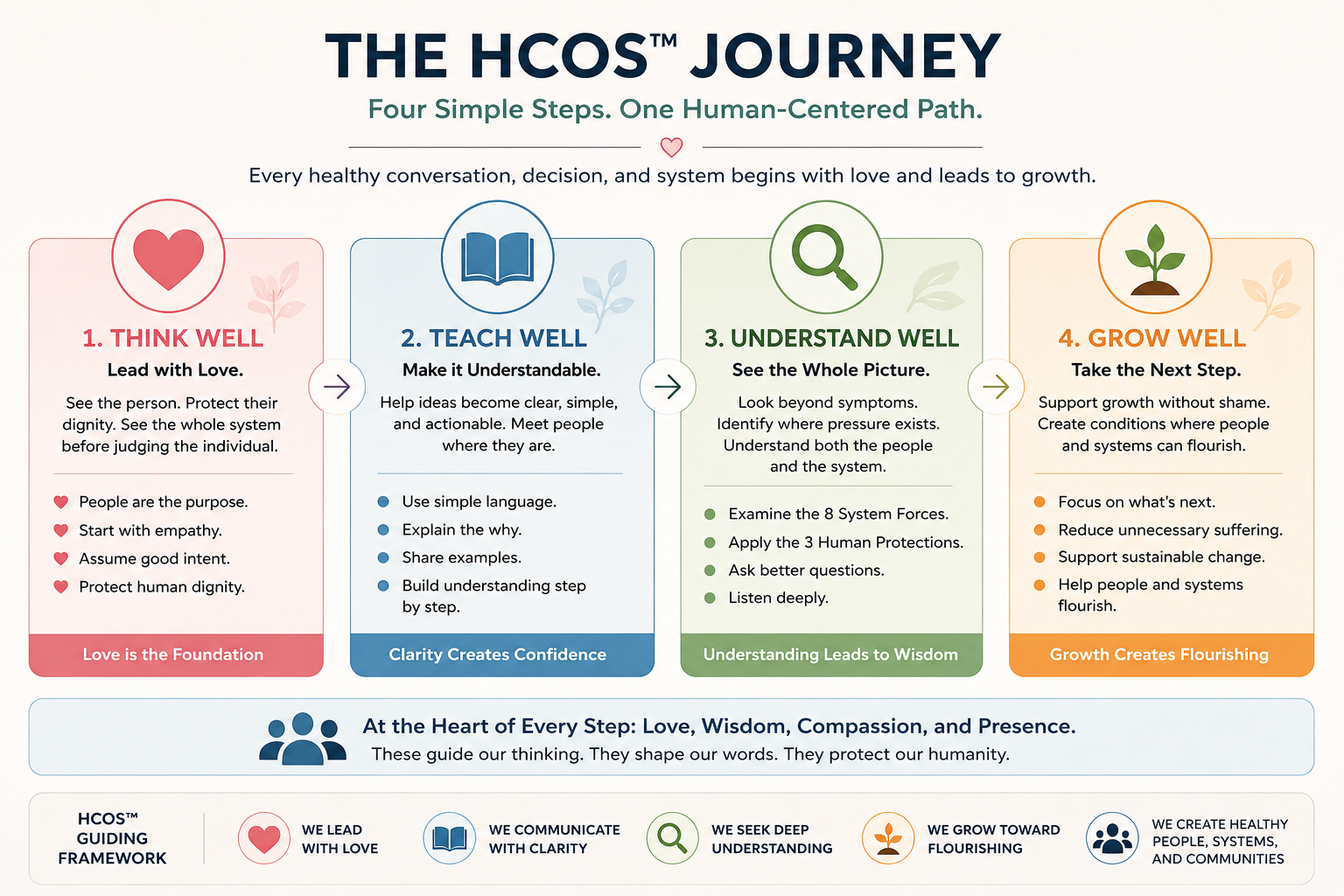
Think Well

Start with Love (+1)

Love reminds us why every system exists. People are never the product. People are the purpose. Because dignity is inherent, every person deserves respect regardless of their circumstances or contribution. Performance changes. Health changes. Knowledge grows. Abilities develop. Circumstances improve or worsen. Mistakes happen. Dignity remains. HCOS changes the question. Instead of asking, "Has this person earned our care?" Ask, "If this person's dignity is inherent, how should we respond?" Care is not a reward. It is one way we recognize another person's inherent worth.

Teach Well: What Is Human Dignity?

Human dignity means every person has value that cannot be earned or lost. Think of it like the sun. Clouds may hide it. Night may make it difficult to see. But the sun never stops existing. People experience success. People experience failure. Neither changes their worth. Healthy systems recognize this difference.

Why Does It Matter? How we define human dignity shapes every decision we make.

If people are viewed primarily as:

  • resources

  • labor

  • costs

  • productivity

  • performance scores

    Then systems often become transactional. If people are viewed as possessing inherent dignity, systems become places where people can contribute, learn, recover, grow, and flourish together.

Understand Well

Look Beyond the Individual

Before judging a person, understand the system surrounding them.

Use the HCOS 8 + 3 + 1 Framework.

Examine the Eight System Forces (8)

Ask:

Where is the pressure?

Consider:

  • Workload

  • Workflow

  • Policies

  • Metrics

  • Resources

  • Leadership Decisions

  • Daily Operations

  • Recovery Time

Then ask: Who is carrying the pressure? Is the pressure necessary? Can the system improve instead of expecting people to carry more? Healthy systems reduce unnecessary suffering whenever reasonably possible.

Apply the Three Human Protections (3). Every decision should protect:

Wisdom, Seek truth, Separate facts from assumptions. Recognize the difference between behavior and human worth.

Compassion. Reduce unnecessary suffering. Protect dignity, especially during difficult conversations. Remain honest without causing unnecessary harm.

Presence. Listen before correcting. Understand before judging. Help people feel seen, heard, and respected.

Dignity and Performance Are Different

Organizations should evaluate performance. Standards matter. Accountability matters. Consequences sometimes matter. Human dignity never changes. Separating dignity from performance allows organizations to maintain excellence without sacrificing respect.

Protect Dignity Instead of Weaponizing Shame

Shame attacks identity. Accountability addresses behavior. Healthy systems know the difference. They tell the truth. They maintain standards. They preserve respect. People learn best when they feel safe enough to tell the truth about their mistakes. Protecting dignity creates that safety.

Healthy Systems Reduce Manipulation

Manipulation depends upon fear.

Healthy systems reduce manipulation by increasing:

  • truth

  • transparency

  • accountability

  • psychological safety

  • respect for human dignity

When people are encouraged to ask questions, challenge assumptions respectfully, and participate honestly, trust grows stronger than fear.

Grow Well

Support People Through Transition. Every life includes change. Success. Failure. Illness. Recovery. Career changes. Loss. Growth. Transitions are often when dignity matters most. Healthy systems do not abandon people during difficult seasons. Whenever reasonably possible, they help people move forward with dignity, support, responsibility, and hope.

Dignity Creates Human Flourishing. Recognizing dignity is not simply about preventing harm.

It is about creating the conditions where people can become the fullest and most authentic version of themselves while respecting the dignity and freedom of others.

Healthy systems encourage people to:

  • continue learning

  • develop their gifts

  • build meaningful relationships

  • contribute creatively

  • practice wisdom

  • care for others

  • pursue meaningful work

  • help others flourish

Human flourishing grows naturally where dignity is consistently protected.

Putting HCOS Into Practice

Before making a decision, pause and ask:

❤️ Think Well

Did I recognize every person's inherent dignity?

📖 Teach Well

Have I explained expectations clearly and respectfully?

🔍 Understand Well

Have I considered both the individual and the system?

Where is the pressure?

Can the system improve instead of asking people to carry more?

🌱 Grow Well

Will this help people learn, recover, contribute, and flourish?

Then ask:

Did I begin with love?

Did I use wisdom?

Did I show compassion?

Was I fully present?

Did I reduce unnecessary suffering?

Did I preserve accountability while protecting dignity?

HCOS™ Vision

HCOS envisions a world in which every person is given the opportunity, support, and encouragement to become the fullest and most authentic version of themselves while respecting the dignity, freedom, and inherent worth of others. Healthy systems recognize that protecting dignity is not separate from excellence. It is one of the strongest foundations upon which excellence is built. When dignity is protected: People learn. People recover. People contribute. Communities become healthier. Organizations become stronger. Human flourishing becomes possible.

HCOS™ Summary

Think Well.
Recognize every person's inherent dignity.

Teach Well.
Help people understand without shame.

Understand Well.
See the whole system before judging the individual.

Grow Well.
Create the conditions where people can flourish.

Always...

Lead with Love.
Every person has inherent dignity.

See the Whole System.
Look beyond individual performance to understand the pressures people face.

Protect with Wisdom, Compassion, and Presence.
Seek truth, reduce unnecessary suffering, and help people feel seen and heard.

Help People Flourish.
Build systems where accountability and dignity work together so every person has the opportunity to become the fullest and most authentic version of themselves while respecting the dignity and freedom of others.